

Reporting From the Front Lines of the AI Data Center Boom
On the ground 50 miles west of Phoenix, where the race for compute collides with a rural community

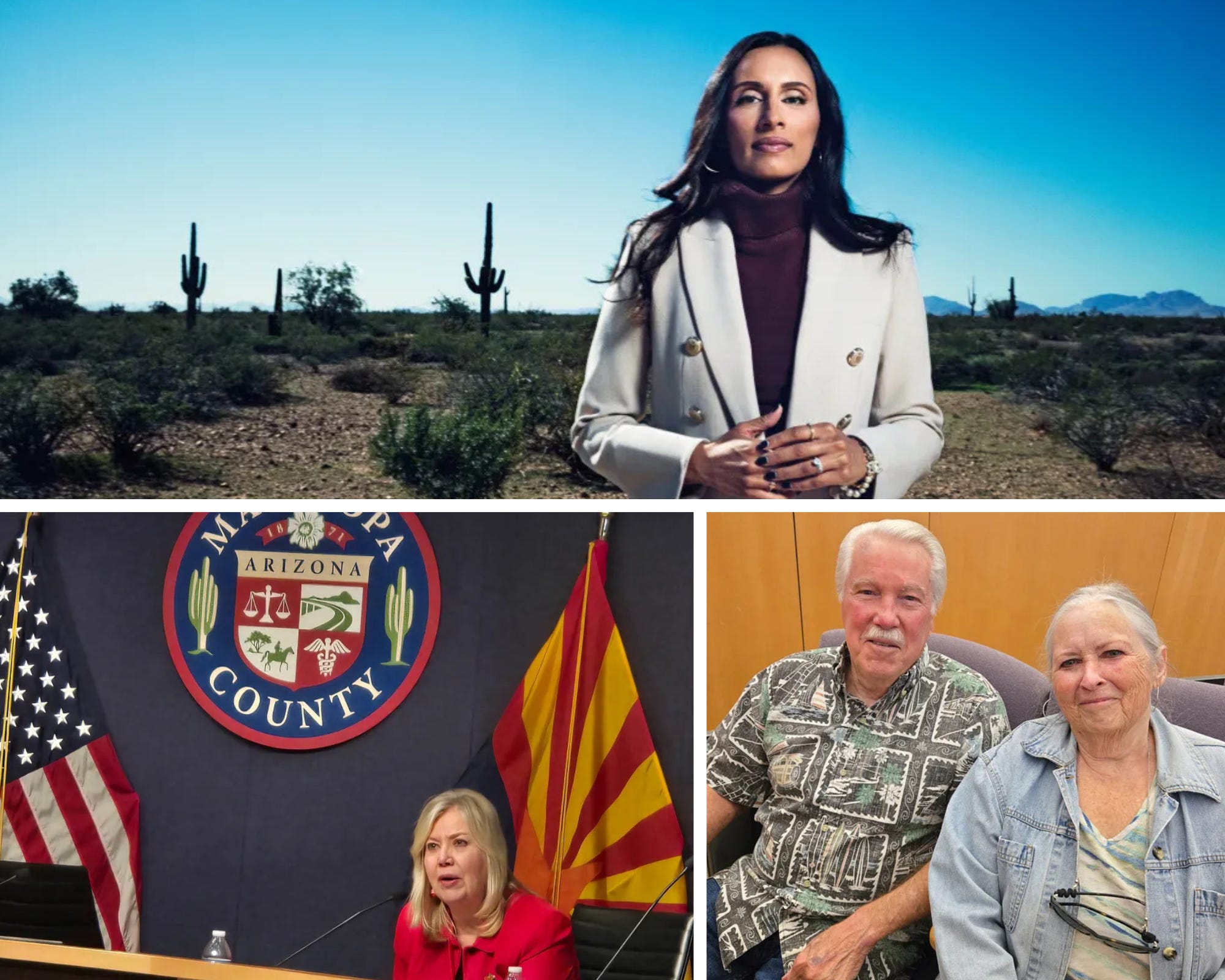
I get a lot of pitches from publicists in my inbox. A LOT. Very few pique my attention, but the one titled “Exclusive Invite: Arizona Data Center Hearing - 12/10” definitely did.
Partly, that was because I’d been looking for the right story to use as a concrete example of the growing AI data center debate—especially the local politics that so often get overlooked. But it was also because I was genuinely surprised that a real estate developer would want a reporter at a zoning meeting, the kind most developers prefer to keep out of public view.
When I realized it would be a quick hop from San Francisco, where I was going to be attending Fortune’s Brainstorm AI conference in the days before the hearing, I knew I needed to get to Phoenix. That’s where I met Anita Verma-Lallian, a 43-year-old Arizona real estate developer who also made headlines last year in Los Angeles by buying the Pacific Palisades home owned by the late Friends’ star Matthew Perry. I also saw clearly how a relentless development push in Phoenix’s West Valley, in an area previously filled mostly with farms, desert brush and seguoro cactus (as well as coyotes, jackrabbits and rattlesnakes)
A trip that became a reported feature for Fortune
That trip ultimately became a reported feature for Fortune about a proposed AI data center 50 miles west of Phoenix, at a site called Hassayampa Ranch—and the rural community pushing back against it. The story looks at how a single land deal sits at the intersection of the AI compute arms race, water and power constraints, zoning politics, and the growing tension between tech-driven development and the people who live nearby.
You can read the full Fortune piece here.
Part of what made the story work is that Anita Verma-Lallian is, frankly, a compelling character. She has a Hollywood edge as a producer and plans for a film studio, she is the scion of a wealthy real estate family—and she presents as polished, articulate, and unflappable. It would have been easy to write her off as another flashy figure riding the AI boom.
But it turns out that Verma-Lallian isn’t a flash-in-the-pan developer or a crypto tourist. She comes from an Indian immigrant family with deep roots in Arizona real estate, has a track record of large-scale projects, and managed to attract serious capital—including investment from venture capitalist, All-In podcast host and Trump mega-donor Chamath Palihapitiya. Whatever you think of the project itself, she isn’t acting on a whim.
A rural community intersecting with the global AI boom
The other characters in the story also ultimately turned this from a simple profile of Anita into a full narrative that serves as a microcosm of the AI data center boom. At the zoning hearing, Maricopa County supervisor Debbie Lesko presided over a unanimous vote that allowed Verma-Lallian to move forward. Rural residents like Kathy and Ron Fletcher spoke about the frustration of not being able to mount significant opposition. Along with Cherisse, who raises heritage turkeys next door to the Fletchers, and Tonya, who has lived in the area since 1999 and runs a maltipoo breeding business, it’s clear that these are regular people whose lives don’t usually intersect with global AI investment cycles, but suddenly found themselves at the center of one.
This story is a long read—and intentionally so. This is the first in a series of reported features from different communities grappling with the realities of the AI data center boom. So, there is much more to come. Again, here is the link to the full story in Fortune (and it will also appear in our February/March print edition).
I totally agree!