

Top AI researchers argue U.S. leadership in open frontier AI has become a democratic and national security imperative
Speakers warned that a future of closed US frontier models and Chinese-led open AI would carry profound implications for innovation, democracy, and national security.

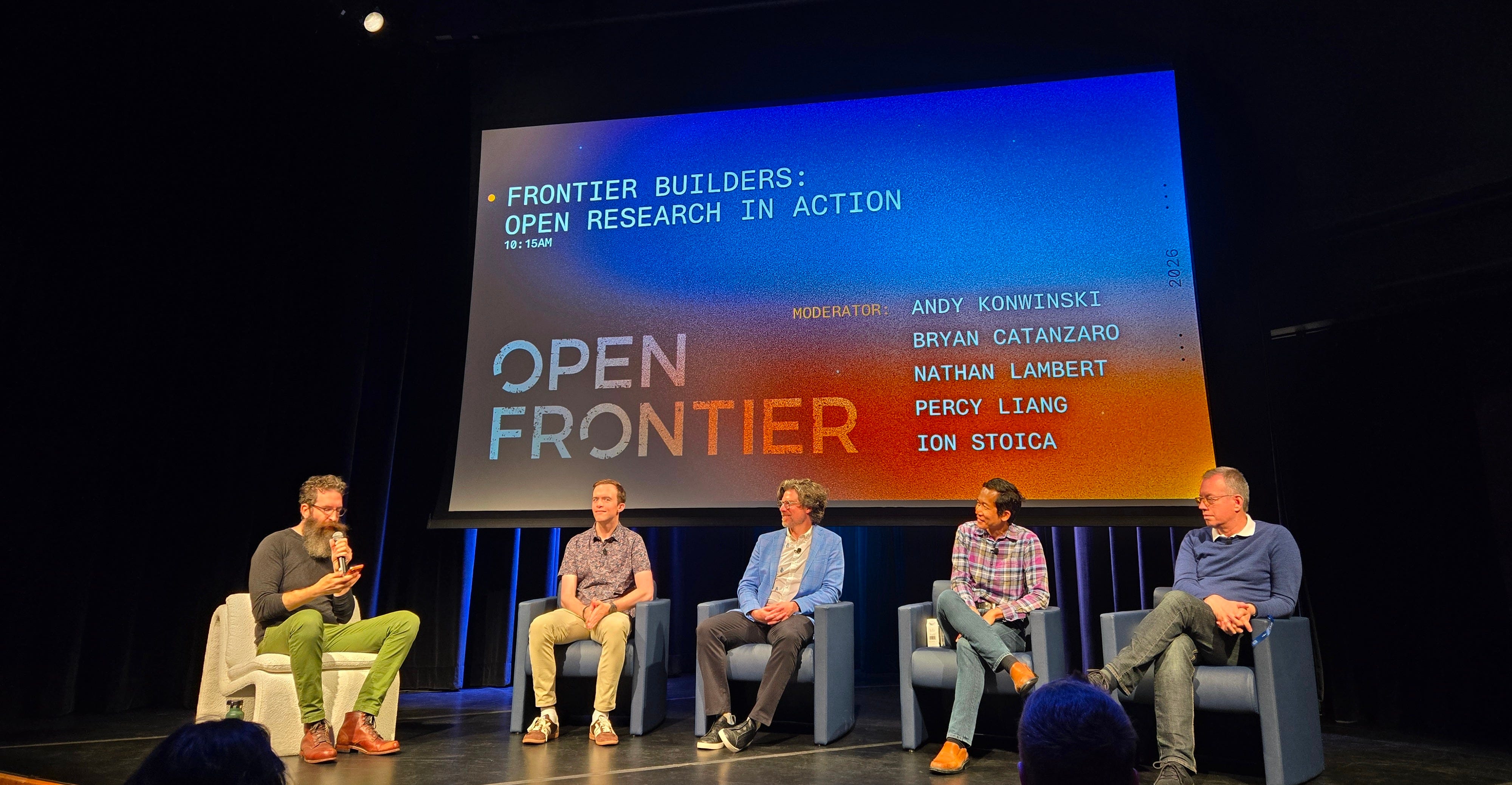
The debate over “open” AI has entered a new phase. For years, advocates have argued that openly available frontier AI models — whose underlying parameters ("weights") are released so researchers and developers can study, modify, and build on them —accelerated research, innovation, and competition. But at a gathering of many of the world’s leading AI researchers and engineers in San Francisco yesterday, the argument went further: maintaining U.S. leadership in frontier open-weight models is now a democratic and national security imperative.
Researchers at yesterday’s meeting warned that as frontier AI becomes increasingly concentrated in a handful of closed labs, the United States risks allowing the global open AI ecosystem to be shaped by China while advanced AI at home becomes dominated by proprietary systems.
The argument contrasts sharply with the position of many frontier AI companies and some AI safety researchers, who contend that releasing increasingly capable models widely could make misuse easier or reduce developers' ability to implement safeguards.
The timing was striking. During the last session of the day, Anthropic announced that the Trump administration had lifted export controls on its Claude Fable 5 and Mythos 5 models. As I wrote in my post last week, legal and policy experts told me that kind of government “kill switch” over AI model access isn't just reshaping who trusts American AI and creating a reliability nightmare for users and builders — it's also opening the door for China's popular open-weights models to fill the gap.
The day-long meeting, called Open Frontier and convened by Databricks and Perplexity co-founder Andy Konwinski’s Laude Institute, brought together leading academic and industry researchers and engineers to discuss how to preserve an open AI ecosystem—one in which frontier models, software, and research remain available for universities, startups, and independent developers to study, improve, and build upon.
One notable absence was former OpenAI co-founder and former Tesla AI leader Andrej Karpathy, who had been billed as a speaker. Last month, however, Karpathy joined Anthropic, writing on X that “I think the next few years at the frontier of LLMs will be especially formative.” He did not appear at the event.
The frontier is now closing
Konwinski framed the conference around a simple premise: the frontier of AI is becoming less open. The data, the people, the GPUs, the models, he said, are “being pulled back behind closed doors,” which he framed as a risk to democracy as a whole.
One of the spiciest takes was from Jennifer Chayes, dean of the College of Computing, Data Science, and Society at UC Berkeley, who said during a panel about funding the open research ecosystem that academics at Berkeley are “all building on Chinese models because we don’t have a Western open frontier model,” and framed that fact as a national security gap the US government should take seriously with fresh funding. She also said OpenAI and Anthropic are running “a very effective fear campaign” ahead of their IPOs
