

Tech has been killing my jobs for decades. I'm still here.
Somehow, I ended up covering the thing that's supposed to kick most of us to the curb.

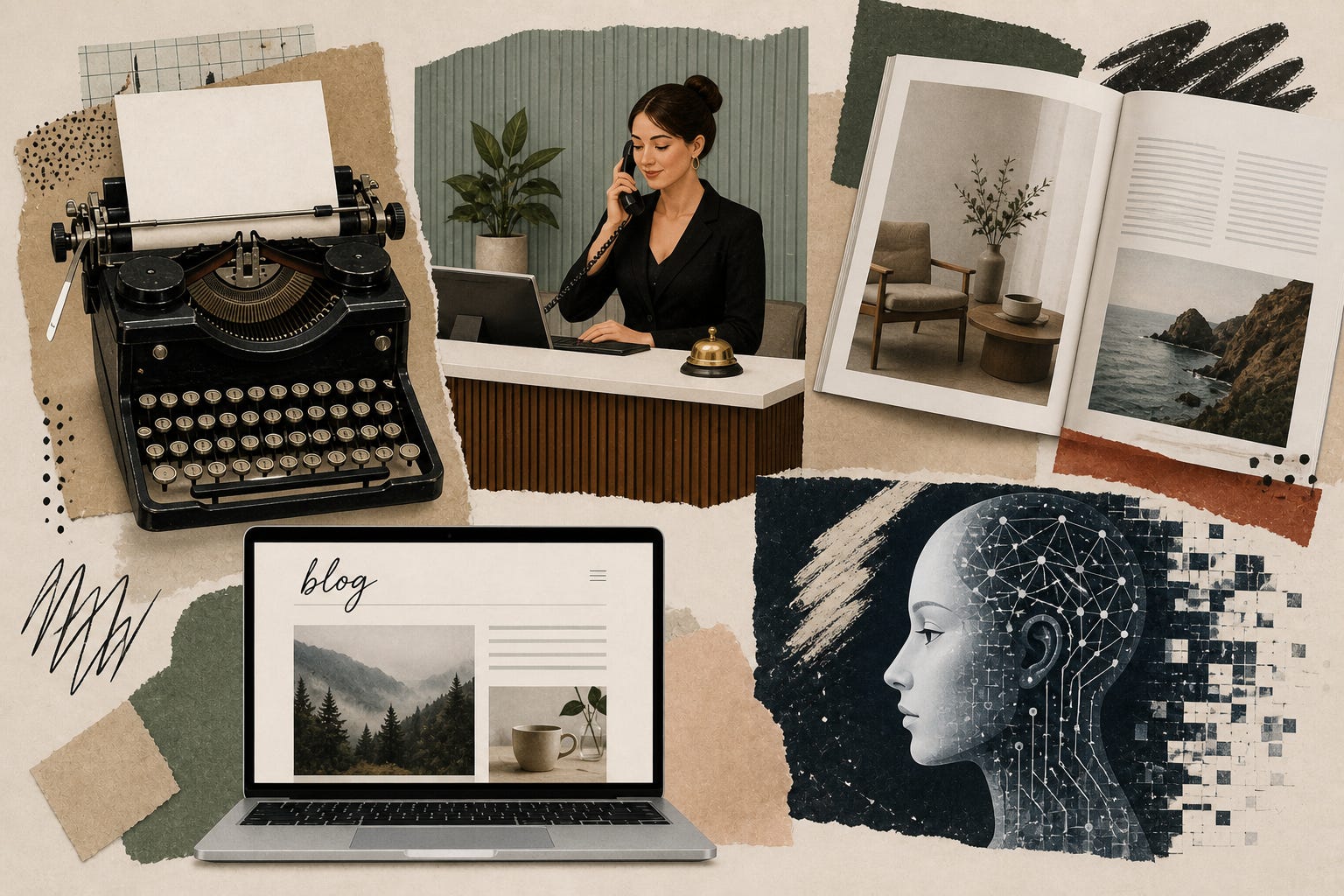
When I showed up at my freshman dorm at George Washington University, I had something almost no one else did: a personal computer and printer (I’ll let you do the math to figure out how long ago it was).
Luckily, my parents had pushed me into typing class as a kid, where I’d built up to a speedy 80–85 words per minute. So while everyone else was hand-writing papers or hunting and pecking on electric typewriters, I saw an opening to earn some cold hard cash.
I started typing papers for other students, charging per page. It was my first job in college — and, for a while, a very good one.
Over the next year or two, however, nearly every student acquired their own desktop. My little business went bust.
That wouldn’t be the last time — my personal boom-bust job cycle was just getting started. For decades, new technologies kept showing up, upending whatever I was doing — both helping and hurting — and always forcing me to figure out what came next.
There were my college-era receptionist jobs, where I sat at a desk answering phones for executives. Those gigs disappeared pretty quickly once voicemail and phone trees came into vogue. My post-graduation, entry-level jobs in PR and advertising required IRL things like photocopying, sending faxes, and shepherding file folders from office to office. None of those job “skills” lasted once email came along.
My typing skills hung on into the mid-90s: I once had a weird part-time gig as a transcriptionist, where I sat in a small conference room with headphones, a tape deck, and a foot pedal to control playback, typing interviews from television news shows like 60 Minutes and Dateline as fast as I could. I eventually got carpal tunnel syndrome and had to give it up — but it was just as well. Human transcribers hung around for years after that, but today I use Otter AI for my own interview transcriptions.
When I got into journalism, desktop publishing was all the rage — I’d just missed the era of cutting and pasting galleys onto layout boards, and had taken a class in Quark XPress, in which I spent much time making silly newsletters for my family. Print magazines and newspapers were still king, so we printed out layouts, spent hours copy editing and fact-checking, held headline-writing sessions for magazine covers, and stayed up late — once a week for a weekly, once a month for a monthly — when the issue finally closed and went to the printer.
As someone who had always dreamed of being published in The New Yorker (still dreaming), I couldn’t imagine any of that changing. But, of course, it did. The internet came along and began pulling everything — readers, ads, attention — online. Yes, I had a Pets.com puppet. Yes, I ordered a single pint of ice cream from Kozmo.com. Oh yes, HTML tags became a way of life.
At that point, print magazines were still part of the publishing mix, but the internet was where the money was. And the work itself was different — faster, constant, driven by clicks and search traffic. Stories were meant for page views, headlines were optimized for Google, going “viral” became a thing. Many people I knew in the business hated it. I found it kind of thrilling.
When I eventually took another staff job, the weekly print magazine I joined had already shrunk to bimonthly and focused mostly on its online business. I could see where things were headed, and I headed for the door once more.
I got deeply into things that had never existed before, like content marketing and blogging and listicles, riding the wave of digital and social, then eventually circled back to journalism.
I had been writing about technology for years — it was one of the best-paying subject areas out there, and if the most secure jobs were in technology, particularly after the pandemic, surely covering the tech beat was a safe place to be.
So when I started covering AI in 2022, I felt like I had won the jackpot. What could possibly go wrong? And when ChatGPT came out that November, and I was covering the biggest story on the planet, I felt unstoppable. This, I was sure, was where I was meant to be.
Yet by mid-2023, doubts were creeping in. The very beat I was covering every day was the one that could send me back to job-hunting. AI was going to write, edit, and publish articles, forcing me into my always-on-standby backup plan — being a dog walker. (I have never actually been a dog walker, but I love dogs and I love walking, so I’ve always considered it a well-laid contingency plan.)
The same beat was supposedly killing media in general, too. Those print magazines that had valiantly pivoted online, figured out SEO, cracked social media — their business models were suddenly upended all over again, thanks to AI Overviews and chatbots.
These days, the first question most people ask me about AI is: “Will it take my job?” Then they often wink at me and, with a nudge, suggest that my industry in particular is ripe for the tanking.
There are headlines about AI causing a “permanent underclass.” I report regularly on economic studies and entry-level job fears, and I often test myself on other non-dog-walking jobs I could do if I were laid off due to AI.
But I’ll be honest: I actually don’t buy it. The latest tech has made many parts of my job obsolete for decades, and I’m sure it’s going to do that for millions of people many industries. But I’ve also been using the latest tech all along to get to the next thing. And in my experience, there is always a next thing.
These days, I use AI for a boatload of tasks in my daily work. All the major tools — like ChatGPT, Claude, and Gemini — help me with everything from editing and research to images and video. But none of it does my work for me. In fact, I have more work to do than ever.
I’m not naive about it, though. I do believe that new types of jobs will develop that we can’t even imagine now, but I also know that I’m not predicting the future. After all my shifts and pivots, I know that no job — no matter how well-paying, how seemingly necessary, how high-status or fundamental — is guaranteed. And I know that not everyone is as lucky as I am. I’m several decades into my career. I’m on my husband’s health insurance. I don’t have kids depending on me. I’ve had time to build a network that took years to cultivate.
But every wave of technology that was supposed to end me just pushed me somewhere more interesting. I have no reason to think this one will be any different. Tech has been killing my jobs for decades. I’m still here.
Great article; Technology and life will continue to grow and expand; follow the flow and you will be well. Thx. Respectfully.
Sharon, I love hearing your story and it resonates greatly! I too should have been disrupted many times by tech in my long career that started in the mid nineties.
I think it’s really important to look around us however. We might be outliers. I know many peers who have been disrupted and never came back into the workforce or came back as a part timer. I see this only intensifying over time.
Yes. It’s a fate that’s possible to avoid. But it’s a numbers game as well.
Regardless congrats on staying in the game and adding so much value. Your AI coverage has been excellent