

The mutual blindness behind the AI backlash
Believers and skeptics are looking at the same technology from radically different positions, but each sees only part of the picture. I fear the resulting backlash will only continue to grow

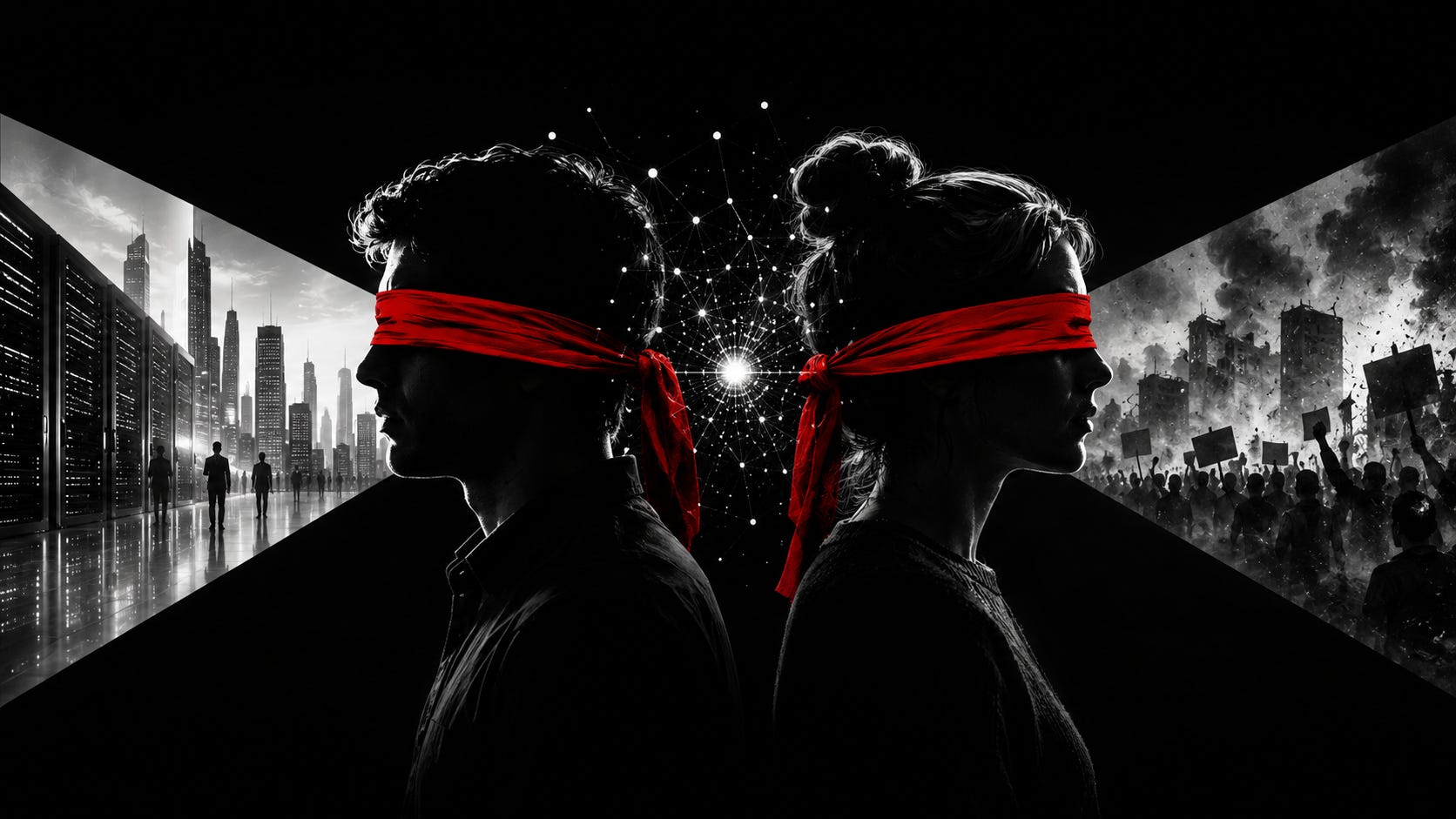
To watch Silicon Valley react on X to last week’s raft of new AI models from OpenAI, Meta and Xai was to witness awe, joy and an unrelenting sense of LFG (let’s f***ing go).
“This week in AI was genuinely unhinged... what a week to be building,” said one poster. “Having access to [OpenAI’s] GPT 5.6 Sol and [Anthropic’s] Fable at the same time feels illegal,” said another, while still another crowed that “The fact that I can build whatever I want just with Claude is a good reason to want to wake up everyday.” Common pronouncements included “This week is absolutely crazy”; “What a time to be alive!” and “It’s all happening so fast (smiley emoji).”
Switch over to Facebook, Threads or Bluesky and you’ll find what feels like an alternate universe. In a Facebook group with more than 150,000 members called Say No to Data Centers, recent comments range from “AI will never help the average American” and “I don’t believe in using AI and I don’t want it” to “Turn AI off. Don’t use it. The big tech industry are hogs using it. We are barely the reason for its demand, but we EACH AND EVERYONE OF US together can make a statement and stand against it by turning it OFF!”
As a journalist who has been reporting on AI day in and day out for the past four years, I regularly speak to founders, CEOs, researchers and engineers who generally fall into the first camp. But in my life outside of work, I constantly hear skepticism, and downright hostility, about AI. And when I began traveling to communities around the U.S. to report my When AI Comes to Town series about the AI data center boom, I started encountering far more people who, in addition to objecting to physical AI infrastructure being built in their area, also question why the technology is being developed at this scale at all.
I think this widening gap in perception may become one of the biggest challenges of the AI era. The people building AI and using it every day are experiencing a different reality from the people who resist it or simply don't use it. That growing disconnect, I believe, is helping fuel a backlash that isn't going away.
What believers see
The believers vibrating with excitement are thrilled by what AI tools allow them to do and how rapidly they continue to improve. They are building apps without knowing how to code, conducting deep research in minutes, creating images and videos on demand, and using AI agents to take on increasingly complex tasks. Every new model release seems to unlock something that was impossible, or at least far more difficult, just months earlier.
To heavy users, the rapid progress is not hype, it’s something they are close to and experience every day. They struggle to understand the hostility building outside their world when they are clearly benefitting from—or at least striving to benefit from— technology that is only going to get better.
What skeptics see
The skeptics, meanwhile, are both befuddled by all the hullabaloo over AI tools that, in their experience, don’t seem particularly useful, and they are concerned about what AI is doing to society and the world around them. They see potential job loss, students outsourcing their thinking, artists and writers watching their work used to build systems that compete with them, a web flooded with AI-generated slop, deepfakes and misinformation, and massive data centers consuming land, power and water.
Not surprisingly, each side finds the other almost impossible to understand. For example, a few days ago, I came across a post on the social network Threads from a popular author who has been reviewed in The New York Times:
“I just discovered this week that people (like, individual people, not corporations) pay actual money to use AI. They’re PAYING to rot their brains??? I get using it for work because a lot of jobs are making people do it, but personally? Your own money?”
Most of the people I interview every week would find this sentiment incomprehensible. They happily pay $20, $100, $500 or even far more a month for AI subscriptions because they see AI as one of the most powerful new technologies of their careers. Every few weeks it seems to unlock capabilities that previously didn’t exist.
Yet to the author of that Threads post—and to many who agree—it is equally incomprehensible to imagine voluntarily spending money on something they believe is making people dumber.
The skeptics risk dismissing a technology whose capabilities are improving far faster than many of them realize. But the believers risk becoming so immersed in what AI can do that they fail to understand the very real concerns of the people who want nothing to do with it—while the backlash continues to get louder.
