

I Called Silicon Valley Tone-Deaf on AI Backlash. It Got Support—and, Yes, Backlash.
The pushback and applause exposed the same fault lines shaping the AI debate.

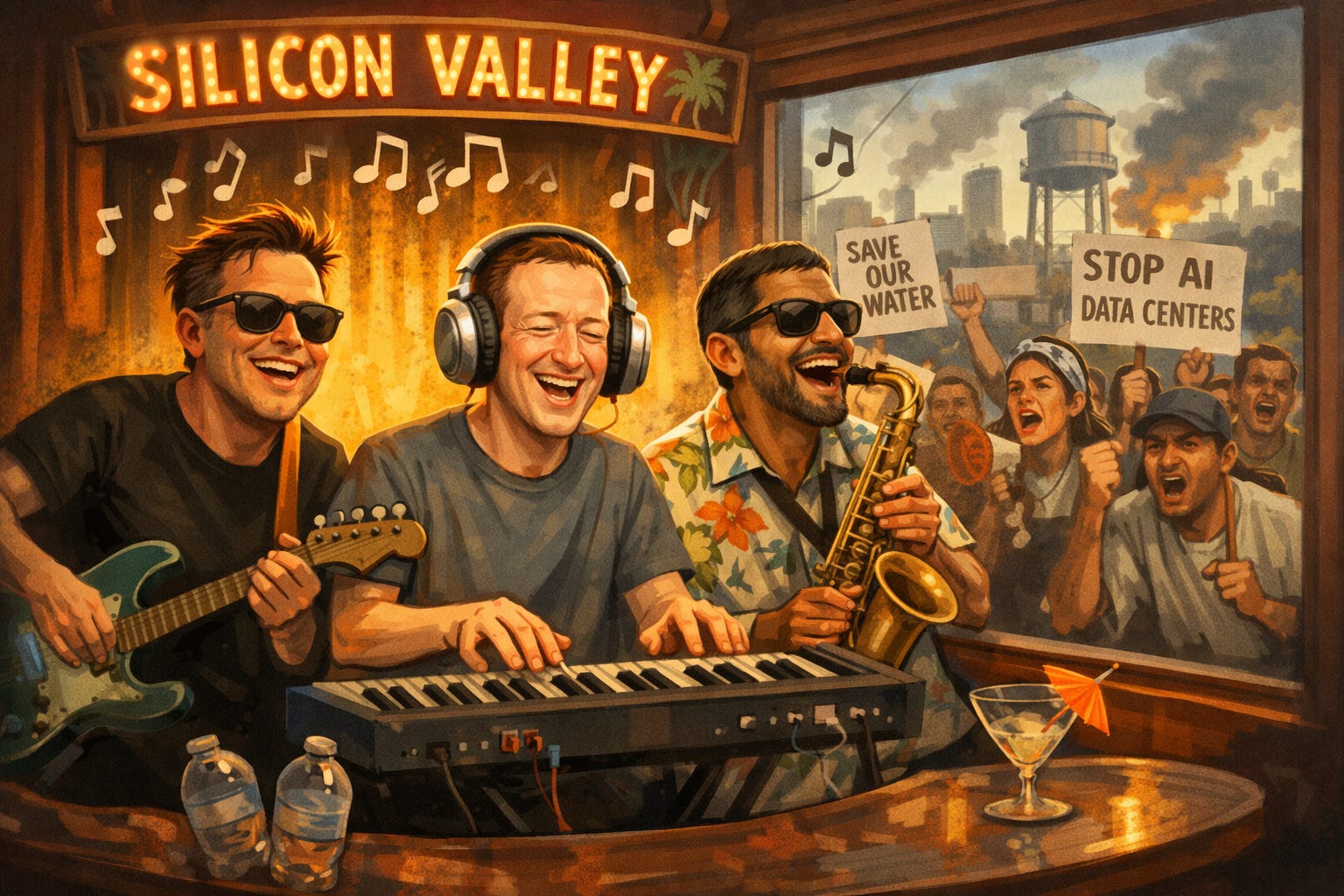
Hope you are all having a wonderful holiday season! Whether you celebrated Hanukkah (like me) or are still enjoying a cozy Christmas, wishing you a very joyous week and a happy new year coming shortly.
My posts on X rarely spark much conversation. But this week, as I was writing my last Eye on AI newsletter of 2025 for Fortune, one was an exception. For Tuesday’s edition, I shared an essay titled Silicon Valley’s tone-deaf take on the AI backlash will matter in 2026.
In the essay, I argued that Silicon Valley’s frustration with public skepticism toward AI reflects a growing disconnect between how AI builders experience the technology and how everyone else does. While insiders see rapid, almost miraculous progress, many outside the industry experience AI through anxiety about jobs, housing, data centers in their backyards, rising costs, and an uneven distribution of benefits.
Basically, what feels like thrilling abundance to AI optimists often feels threatening, creepy, or irrelevant to people already struggling with everyday economic pressures.
As backlash grows heading into 2026, I believe tech leaders need to stop trying so hard to impress the public, but need to find a better way to answer harder questions about who benefits, who bears the costs, and what ordinary people’s futures actually look like in an AI-driven economy. Skepticism isn’t necessarily ignorance—it’s also a rational response to uncertainty and high stakes.
Interesting feedback and serious conversations
The essay prompted some really interesting feedback on X for me — as well as some serious conversations.
Some highlights:
Boaz Barak, a computer scientist at OpenAI: “I actually agree. We in AI need to do better to communicate what AI's impact will be for the average person. While I share the optimism about the long term, we also need to (and can!) ensure people see the benefits in the short term.”
James Rosen-Birch, a startup founder: “Pieces like this are good, but also a little late to the party — we’re already about a month into the propagation of a vibe shift addressing this exact issue. To the point that people resisting it now come across out-of-touch.” [NOTE: I pointed out to Rosen-Birch that I’ve been writing pieces on this topic for two years! I certainly hope people are getting it]
Rohit Krishnan of Strange Loop Canon: “The hard part about explaining why AI is useful or interesting is that at the beginning stages of any technology the best you can say is that it is a better horseless carriage. Everything that it could be remains inchoate, embryonic in potential, till we too adjust. This has been true across every single technology we've invented, from paper to novels to electricity to the Internet to mobile phones. The negatives are always easy to see, because the negatives are built off what exists, they talk to the reality around us. Even the stupider takes link to reality. Whereas the optimistic takes have to paint a picture of a future that does not exist. And what makes it worse is that you cannot paint a picture successfully because you do not know what the future would be like. Think about the ways in which we conceptualized what the internet would help us with in the '90s. Very little of it was on point, but collectively the optimism was of course successful.”
deepfates, who researches human-AI alignment at Upward Spiral: “Oh, you’re skeptical? You want answers? You’re worried that things might change and be uncertain? Well, here’s what happens if we *don’t* build AI. The legacy institutions, overburdened with more people, choices, and information than they were ever designed four, will continue to crumble and fail. Or industrial base will keep aging, our democracy will keep bogging down, our economy will keep inflating and crashing in faster and faster cycles.”
everythingism: “If the public was really seeing massive boosts in productivity and major advancements in research thanks to generative AI, I don’t think the negativity would exist. It’s not just a messaging problem it’s a substance problem.”
None of these comments surprised me, by the way. The reactions followed a familiar script, including, of course, some far more extreme takes on both ends of the spectrum. AI may be accelerating, but the questions people are asking—about jobs, fairness, power, and who decides what comes next—are the same ones they’ve always asked. Until those questions are taken seriously, the backlash won’t fade. In fact, I expect to see much more of it in 2026, even as — or because of — the even more impressive tech that’s coming down the pike.
I’d love to know what you think. Let me know in the comments, and enjoy the rest of the holiday weekend.
I love the picture and your POV.
They are definitely tone deaf and we all have to push for better rules.
Excellent analysys! How do we bridge this gap? Genius.