

At the Explorers Club, thinking about AI’s next frontier
A final note before vacation begins

This is my last post before I head out on vacation tomorrow (🥐🇫🇷🥖).
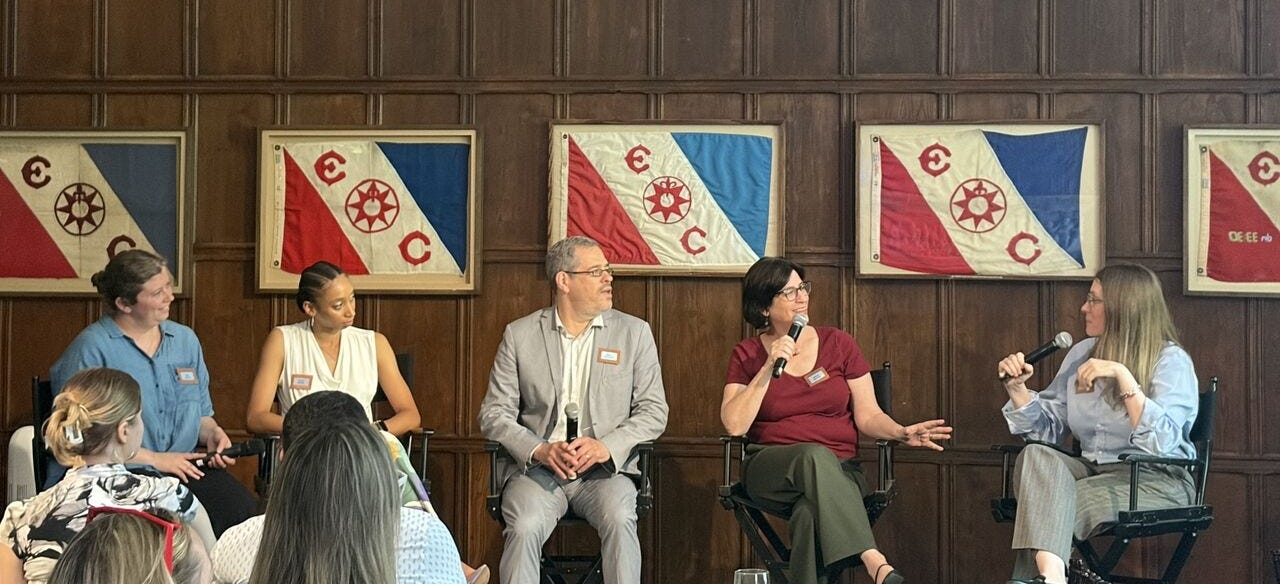
I had never heard of the Explorers Club. Turns out it is an international organization dedicated to the advancement of field exploration and scientific inquiry, which is also a fabulous private club on the Upper East Side of Manhattan located inside the landmark Lowell Thomas Building. Founded in 1904, it has counted the world’s most notable explorers as is members, including the first to the North Pole, first to the South Pole, first to the summit of Mount Everest, first to the deepest point in the ocean, and first to the surface of the moon.
This morning, journalists and podcast hosts Jennifer Strong and Jeff Wilson led an “AI and leadership salon” called The Drawing Room at the Explorers Club, and I was happy to be asked to join a panel of reporters to talk about all things AI, of course.
To be honest, I was feeling quite cranky and curmudgeonly about all things AI, even after two cups of coffee. It’s only Wednesday, and it’s already been a week chock-full of blowback, pushback and general gloom and doom about anything related to artificial intelligence.
“The American Rebellion Against AI is Gaining Steam,” a Wall Street Journal headline screamed yesterday. In leaked audio, Meta CEO Mark Zuckerberg was tone-deaf and heartless in leaked audio from an all-hands meeting in which he told employees that he was training AI on them ahead of mass layoffs (which happened today). Oh, and college grads are booing their commencement speakers, who don’t seem to get that only 18 percent of Gen Z-ers feel hopeful about AI, and almost half say the risks outweigh the benefits.
So today, when I looked at this poetic tribute to the Explorers Club written in 1921, hung in a room that included Teddy Roosevelt’s desk and two African elephant tusks), I felt a bit sad. Who would not admire explorers, who “proceed to seek the stars, through vast expanse, and revel in the cosmic dance?” I, for one, admire those that “scale the peaks where eagles soar, and sail the seas where waves all roar, confronting challenge, without fright, illuminating dark with light.”
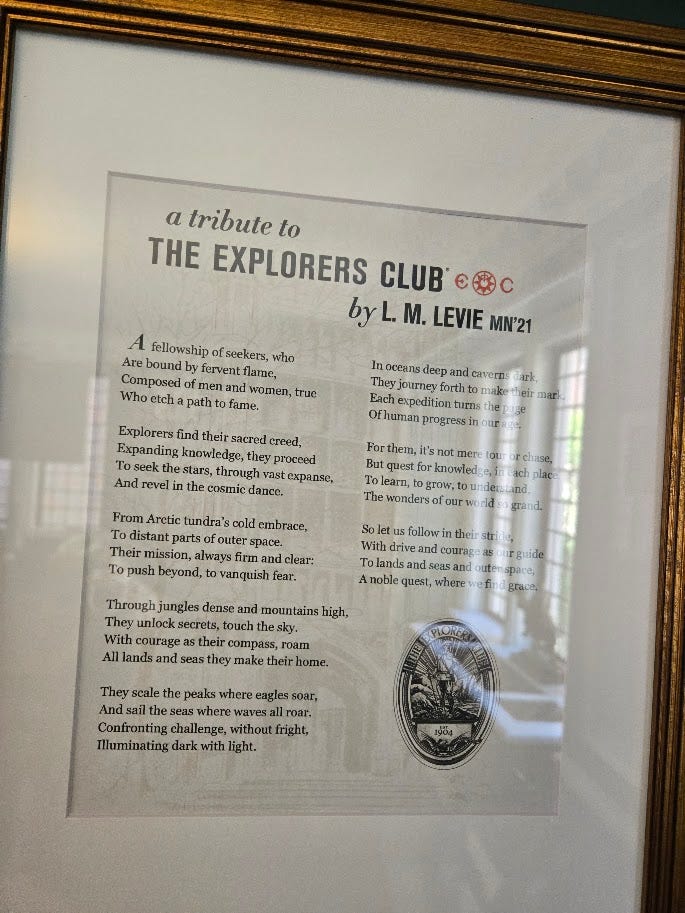
I would like to think of the AI industry as these kinds of explorers — a “fellowship of seekers, who are bound by fervent flame.” I certainly know many AI researchers and engineers who qualify as explorers, venturing into systems that behave unpredictably, mapping capabilities no one fully understands, and building tools that may reshape science, medicine, language, robotics, and human knowledge.
But as OpenAI and Anthropic prepare to go public, it’s becoming harder to hold onto that romantic image of exploration. Big Tech and AI are increasingly entangled with Wall Street expectations, geopolitics, labor fears, and battles over massive infrastructure projects in small towns across the U.S.
My hope is that the kind of curiosity and humility that once defined generations of explorers can still survive amid all the money, power, and hype.
On that note, au revoir! The AI news will continue without me while I head off on a small expedition of my own across the pond. I’ll be back in a couple of weeks.