

Anthropic's Claude Code isn't ready for the rest of us. Not even close.
Developers told me I could get going in just a few minutes. They were right — but only with my developer husband by my side.

For months, I’ve wanted — no, needed — to try Anthropic’s Claude Code. How does it look if Fortune’s AI reporter couldn’t wrap her mind around the tools everyone is raving about?
“Everyone should be using Claude Code more,” wrote Lenny Rachitsky in a post featuring “50 ways non-technical people are using Claude Code in their work and life.” And hundreds of influencers across social media raved about the power of “vibe coding,” in which a beginner like me could clearly create apps, games and tools by just chatting with Claude Code, Codex, Cursor or Google AI Studio.
Even my Substack journalism peers, like Big Technology’s Alex Kantrowitz, made me feel FOMO, posting that he was “building some Big Technology internal tools with Claude Code.”
Developers I asked were encouraging, even reassuring. It’ll take just a few minutes to get started, they told me. One pulled up their terminal and showed me how to download Claude Code. Another pointed out that the new desktop app made getting started more seamless than ever.
That’s sweet. But the truth is that Claude Code is nowhere near ready for normies like me — desktop app or not. The developers (or even the power-user hobbyists) hyping these tools aren’t wrong, exactly. Claude Code and its ilk are genuinely changing their lives. But they’re also the ones driving the narrative, and their experience is not everyone’s experience. What transforms a developer’s workflow in minutes can leave the rest of us completely lost. Hype, unfortunately, does not mean “accessible.”
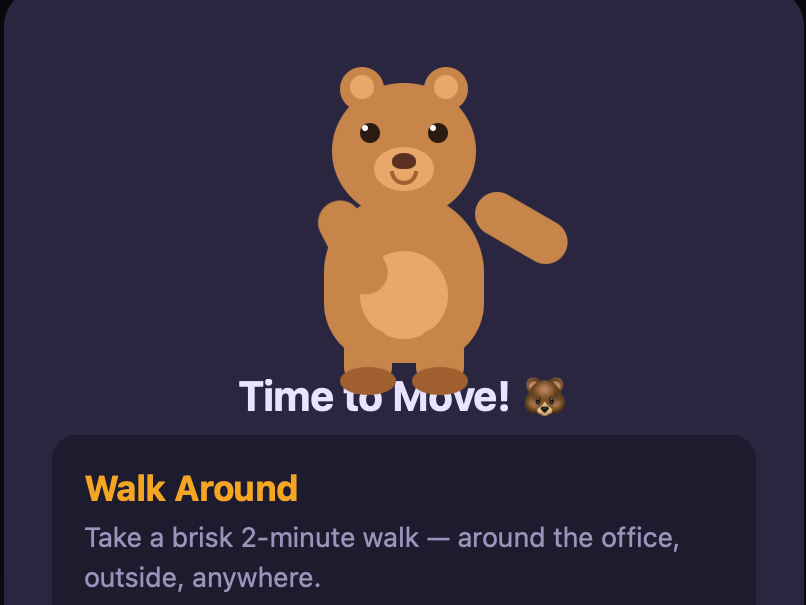
I did not get farther than downloading Claude Code on my own. Shortly after that, I was stuck. My software developer husband had to explain everything: how to install Node.js, the runtime Claude Code requires; what a directory is; how to set up a project folder; how to read error messages; and why I couldn’t get my simple app to work — a reminder app to nudge me to move every 30 minutes, with encouragement from a dancing teddy bear. Even after thousands of tokens and many minutes of ruminating, Claude Code seemed stuck. And even my developer husband was temporarily stumped.
Turns out to get my app going I just needed to copy the preview URL into a browser. Claude Code hadn’t said a word about that — or much else that was helpful along the way. And once my teddy bear started dancing, with only one attached arm and the other dangling, it was clear that my little app was not ready for prime time.
My husband grumbled about it for the rest of the evening, insisting that the Claude Code desktop experience was clearly marketed for non-developers, but that it fell well short of that promise. To really target the average consumer, a setup flow could not assume terminal familiarity. It would need plain-language explanations of every dependency. It would require proactive prompts that tell you what to do next. And, of course, clear explanations about why an app isn’t working and what to do about it.
Sure, I could take a coding class. But isn’t that the opposite of what everyone in AI is promising — that coding will soon be unnecessary, that software engineers are headed for extinction? And isn't democratizing AI supposed to be the whole point?
We’ll need developers for a long time to come — no doubt. The bar isn’t a working teddy bear whose arm isn’t dangling by an imaginary thread. It’s being able to get started without a developer sitting next to you. When that day comes, I'll be first in line, teddy bear and all. But for now, I’ll stick to my trusty chatbots.
Which is fine, it's coming. But not yet and shouldn't be marketed as very simple.
The point I am making tho is some of these tools are being marketed to non tech folks but they still are not that accessible for the vast majority of people from a UX standpoint