

A Michigan farm town voted against an AI data center. Two days later, a zoning lawsuit changed everything
In my latest deep-dive for Fortune, a battle in Saline Township shows how quickly local land-use fights are becoming front lines in the global race to build AI.

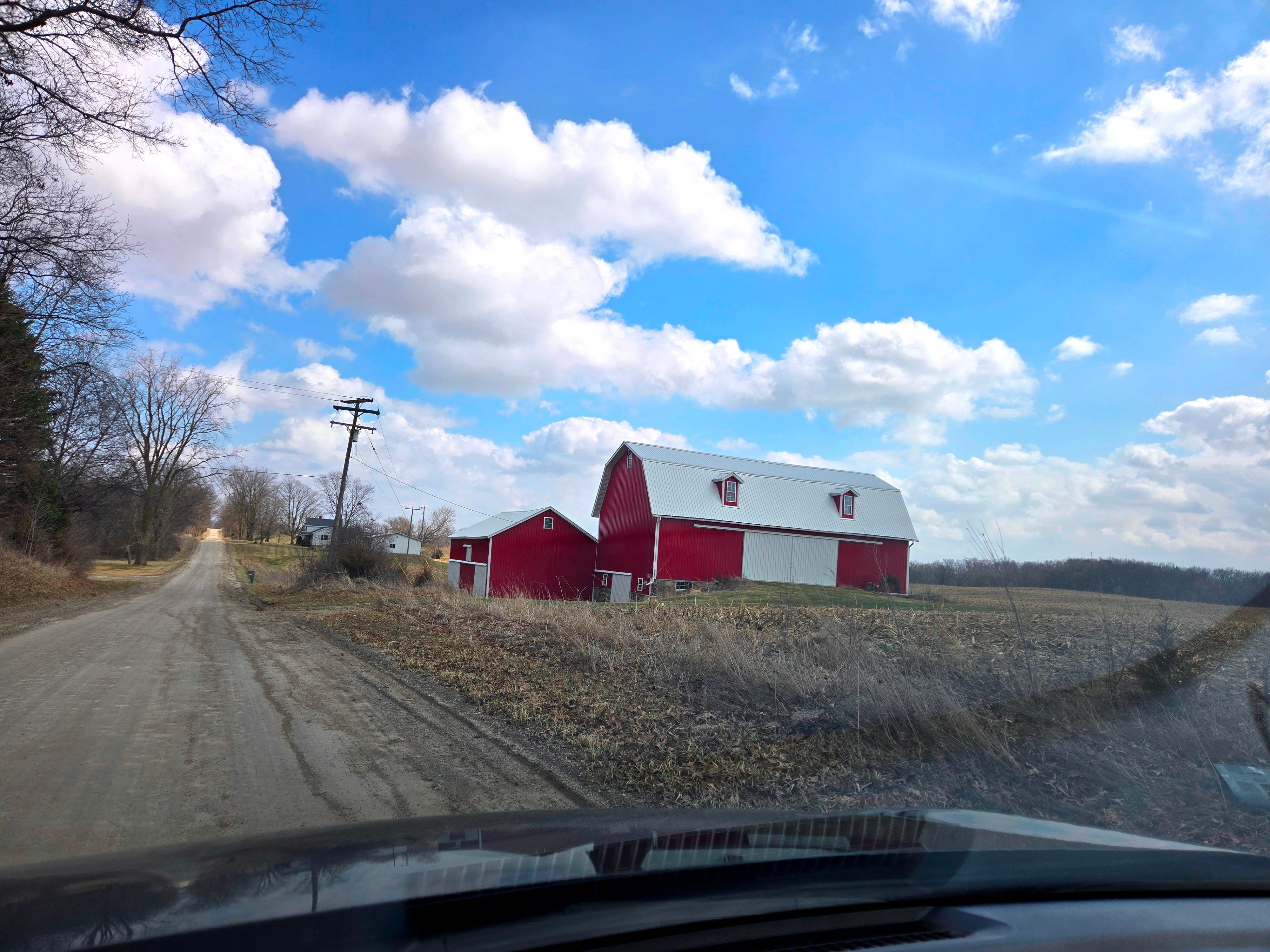
The above photo from my trip to Saline Township, Michigan, in March tells you a lot about this agricultural community 30 minutes south of Ann Arbor: classic red barns, dirt roads, and a farming tradition dating back generations.
When I returned from the trip, I teased the story of how a massive AI data center project landed in this rural corner of Michigan. But it took far more reporting — and many more interviews — to fully understand the complicated legal and zoning dynamics that allowed the project (now to be a $16 billion campus for OpenAI and Oracle,) to move forward, even though the vast majority of residents opposed it and local officials voted against it.
Yesterday, I finally published the story in Fortune (gift link), and I hope you’ll take some time this weekend to give it a read. I admit it’s a long one, but I also really think it’s an engaging and thought-provoking saga of what happens when the AI boom collides with rural politics, legal pressure, and fears that local communities are losing control over what gets built in their backyard.
That said, I didn’t think a deep-dive story into what is essentially a zoning fight in a tiny Michigan town would take off online. But to my surprise, when it was published yesterday it immediately hit Google Search and Google Discover like lightning, quickly racking up nearly 300,000 views at last count.
If you recall, I had already published two previous stories on AI data centers and rural communities — one on the chaos at Meta’s mega-site in northeast Louisiana, and one on a proposed project deep in the desert near Phoenix, Arizona. Neither of them got that kind of massive online traffic out of the gate, or at all.
It makes me wonder if something has changed in the last few months since I visited Arizona, or even in the past three months since I was in Louisiana. I'm becoming this topic has entered a peak moment, as backlash to AI data centers, and, frankly, AI in general, continues to heat up. In addition, there was something about this particular story (Midwest, farm, legal issues, power struggle) that struck a chord. Certainly, this trend is part of the public consciousness now.
I do sometimes get the sense that people reading these stories assume I’m against AI data centers. I’m not. Data centers have powered our online lives for decades, and AI infrastructure is poised to expand that dramatically in the years ahead. Reporting these stories, I’ve met hard-working and thoughtful people at development firms, construction companies, utilities, and Big Tech companies who genuinely believe they are building something important. And on a sheer engineering level, these facilities can be astonishing to see up close.
But while the strategy in Saline Township may have worked — at least for now — I also came away believing that pushing through projects over overwhelming local opposition is probably not a sustainable answer to the computing demands of the AI industry. And visiting these communities in person made clear just how complicated, emotional, and consequential these fights are becoming across the country.
As Kathryn Haushalter, one of the residents opposed to the Saline Township project under construction, told me, “It’s a very complicated situation and a lot to take in,” she said. “I’ve had to learn more about ordinances and state law and zoning than I ever thought I would want to. But now I realize how important these nitty-gritty, seemingly boring things really are. They can upend your whole community.”
Fair, let me try again. Your piece is really about who ends up paying for the $16B Saline build. The token meter is where that cost has to get recovered eventually. We run a weekly inference price benchmark across 51 vendors, and the headline indexes have been near flat for several weeks now. That's the puzzle. The capex is going in fast, but the price end users actually pay isn't moving up. Either it hasn't repriced yet, or competition is absorbing it before it reaches the meter. Both have very different implications for whether projects like Saline ever pencil out. Your story is what people see. The token data is what's happening underneath.
The unresolved tension in stories like this is whether the capex actually shows up at the token meter. Across our weekly inference indexes, per-token pricing has been near flat for multiple consecutive weeks despite the buildout pace. Either the new capacity isn't pricing into inference yet, or it's competing prices down rather than up. The procurement question for enterprise buyers is which one holds.